Westport
The Truth Behind the Machine
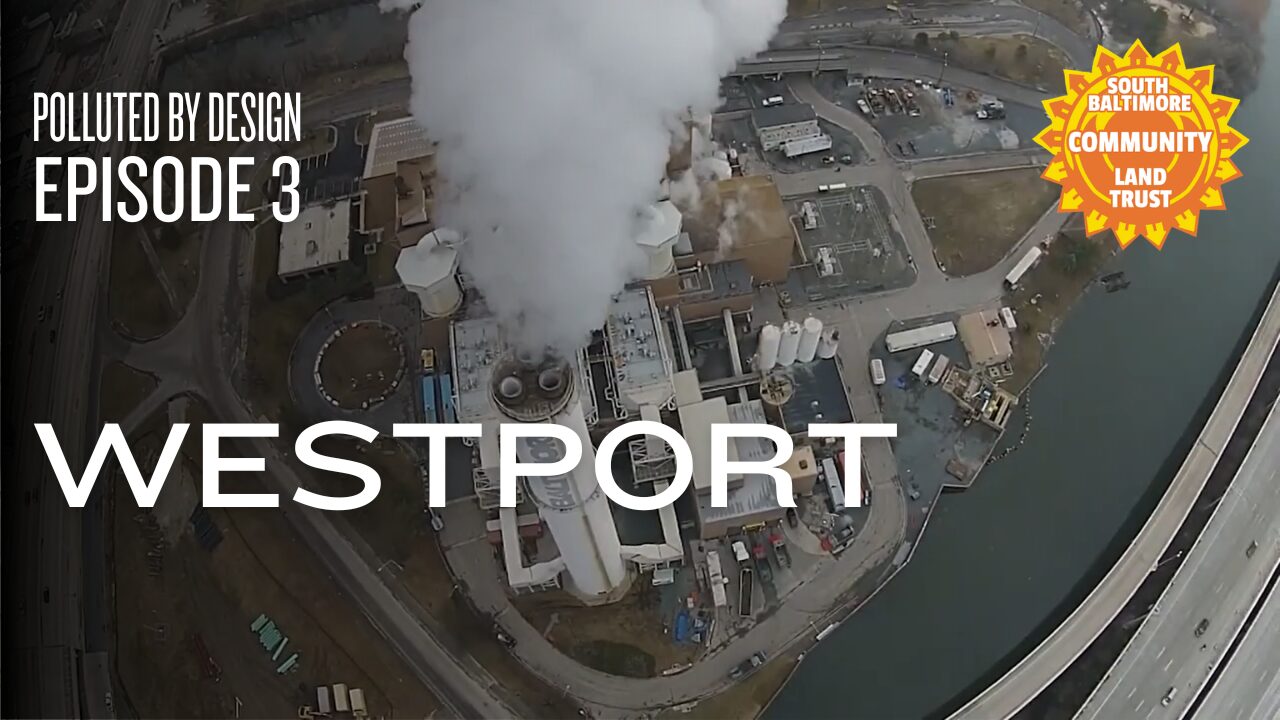
In the prelude of the docuseries’ third episode film on Westport, the navigating question of the film is posed to the viewer:
“had not the incinerator been located so close”…if residents “would have lived longer or had a better quality of life?”
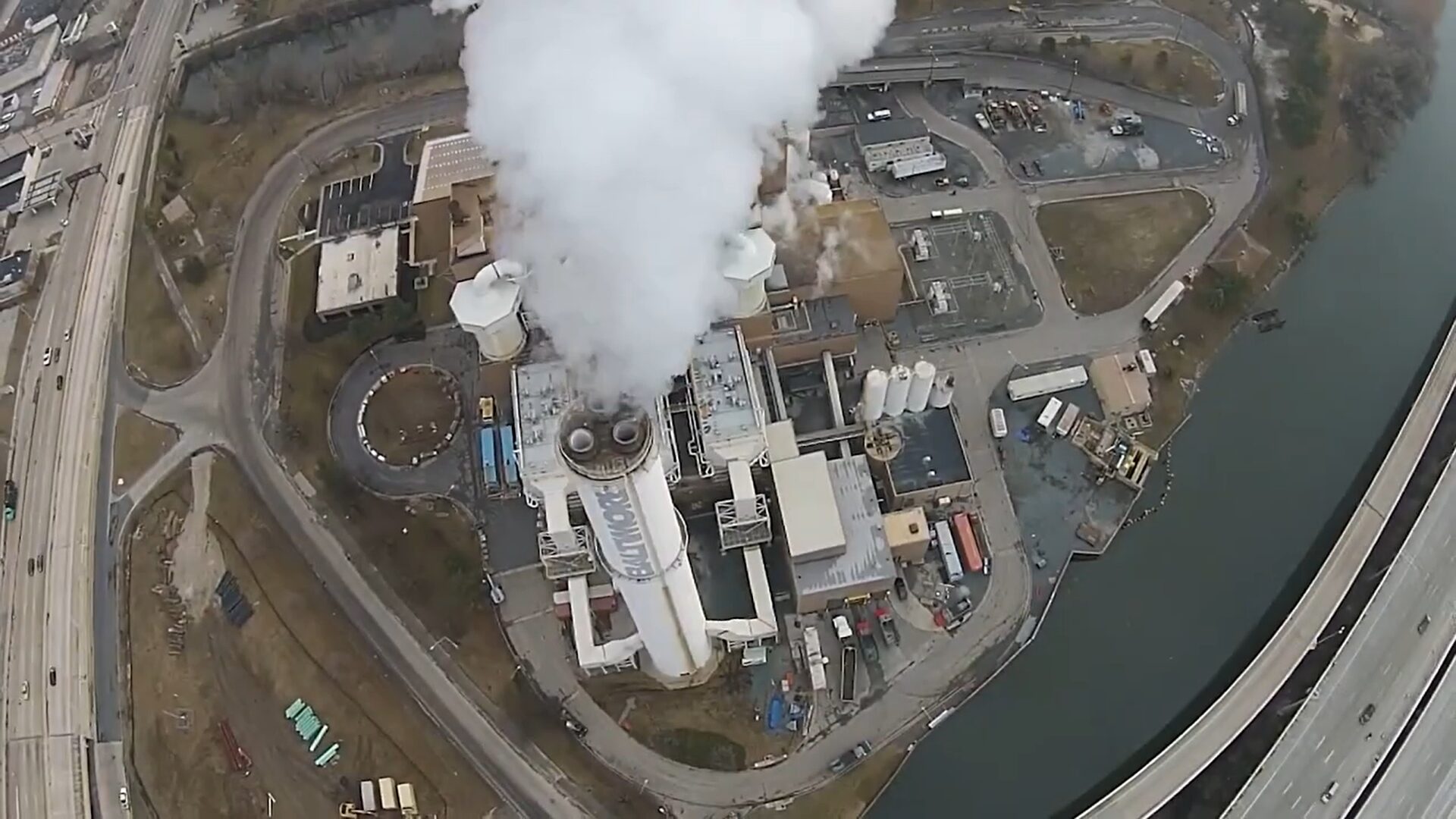
In the introduction, Westport CEDC co-founder and local resident Keisha Allen introduces us to the experience of living in Westport with both loving neighbors as well as neglected development. The aging development, vacant homes, and unwelcoming pollution that deter new potential residents and visitors can be traced back to the unwelcoming monument that commuters driving through Westport pass by on i-95: the Wheelabrator’s WIN-Waste Incinerator, formerly known and remembered by residents as BRESCO.
BRESCO, the city’s largest, most polluting waste facility, was chosen to be hosted in the residential neighborhood of Westport by Baltimore officials in 1981 after protests from the majority white communities of North Baltimore. Although the residents of Westport–largely low-income and African American–resisted the facility’s establishment, their voices were ignored by city officials, following Baltimore’s historic tendencies for red-lining and environmental racism. Ever since, residents of Westport have endured health-adverse and even lethal amounts of lead, hydrochloric acid, nitrogen oxide, mercury, carbon monoxide, sulfur dioxide, formaldehyde, and carbon dioxide. Scene two tells this story of erasure in Westport, South Baltimore by telling the full pre-history of the incinerator.
In the following scene, Allen and other South Baltimore resident organizers explore their experiences fighting the waste injustice in their neighborhood, contradicting BRESCO’s corporate claims of the “benefits” it brings to the community as collected through 2025 court testimonies with their lived experiences of harm that the incinerator has brought not to mention scientists’ testimonies on the annual $60 million in health damages the incinerator costs residents.
Finally, residents share how they are imaging a future for Westport beyond incineration by “starving the beast” that is BRESCO by leading grassroots efforts in residential composting as well as how they are advocating for the facility’s permit not to be renewed in 2030 following the successful designation removal of incineration as clean energy and the South Baltimore Community Land Trust’s recent Title VI complaint to the EPA over environmental racism.
The film asks viewers to instead see Westport as the community that it is–highlighting the agency of its residents and their imaginations of a Westport beyond incineration and environmental injustice. The film is directed towards city officials to understand the community’s responses against arguments that support keeping BRESCO in Baltimore. Additionally, let this film serve to inform the general public of the lived experience of Westport residents in the midst of the toxicity and erasure they have experienced for generations that made way for the lethal BRESCO incinerator to be built and defended in their neighborhood in the first place.
Additional Resources on Episode 3: Westport
This was the map used by the Home Owner’s Loan Corporation to grade neighborhood “desirability” in 1937. Read more and download a high resolution version of the map here. 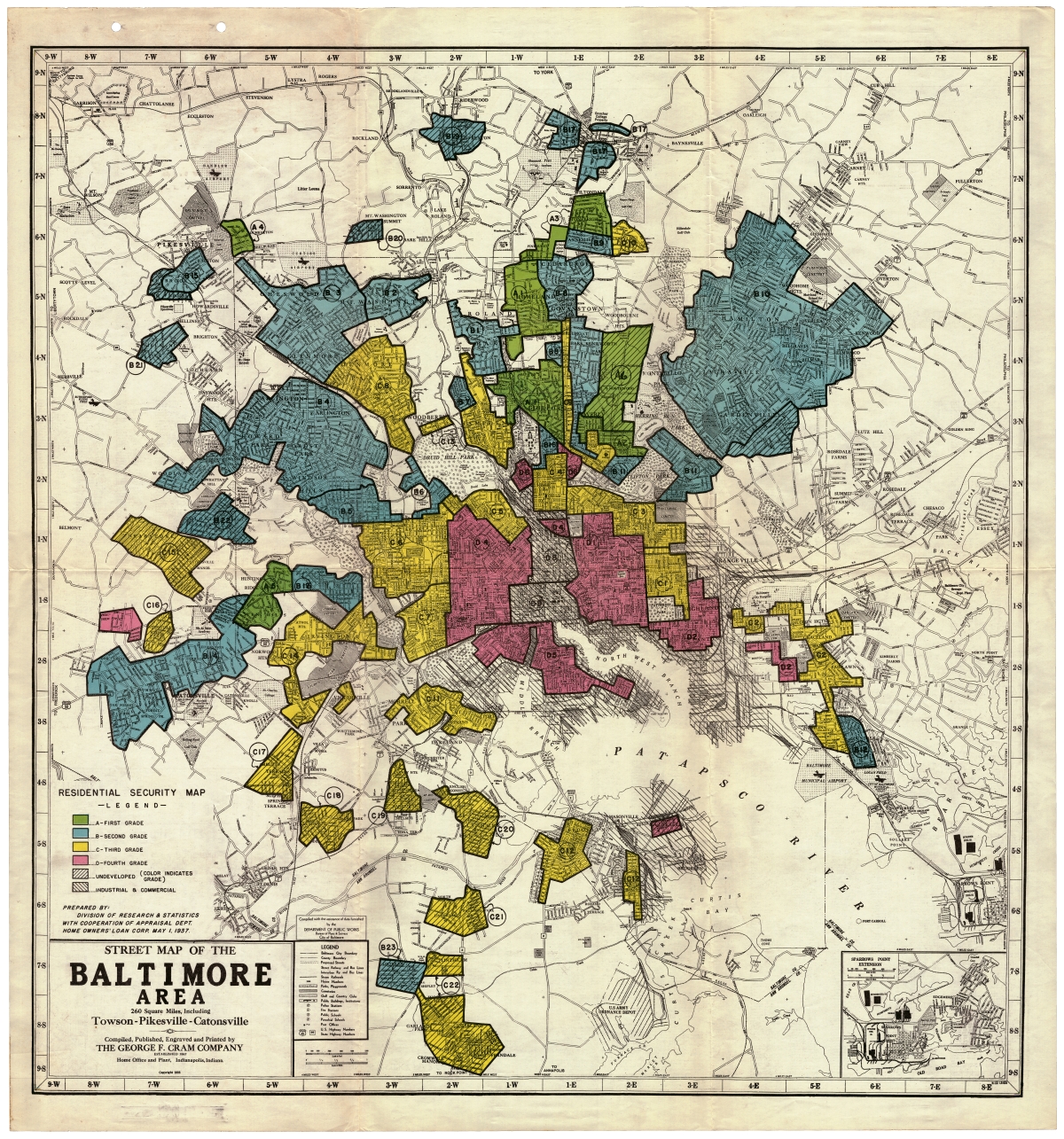
- Why is it important to speak of and govern Westport as a community and not simply as a place surrounding BRESCO and other polluting facilities?
- Ahmann, Chloe. (2024). Futures after Progress : Hope and Doubt in Late Industrial Baltimore. (1st ed.). University of Chicago Press.
- Ahmann, Chloe. and Pandian, Anand. (2024, Jun 26). OP-ED: The Fight against Incineration Is a Chance to Right Historic Wrongs. Baltimore Beat (narrated in film by Mike Middleton) baltimorebeat.com/op-ed-the-fight-against-incineration-is-a-chance-to-right-historic-wrongs/
- Aning, Agya K. “Baltimore Continues Incinerating Trash, despite Opposition from Its New Mayor and City Council.” Inside Climate News, February 22, 2021. https://insideclimatenews.org/news/19022021/baltimore-continues-incinerating-trash-despite-opposition-from-its-new-mayor-and-city-council/.
- Azhar, Aman. “Maryland’s Renewable Energy Program: More Smoke and Mirrors than Wind and Solar, New Report Alleges.” Inside Climate News, January 29, 2025. https://insideclimatenews.org/news/29012025/maryland-renewable-energy-program-failed-promises/.
- Baltimore History Channel, “Westport Godmother – South Baltimore- (1986)”. Youtube. January 6, 2025. https://www.youtube.com/watch?v=Xhw8ymgwWsM
- Flowers, C. V. (1962, Nov 03). Board Seeks New Site for Incinerator: 700 Residents Protest Proposed Hampden Area Location. The Sun. https://proxy1.library.jhu.edu/login?url=https://www.proquest.com/newspapers/board-seeks-new-site-incinerator/docview/534041379/se-2
- “Gallery: Vital Signs 17 Children and Family Health Maps.” BNIA, 2017. https://bniajfi.org/mapgallery/gallery-vs17-health/.
- Gilbert, K. (1977, Feb 13). The city nears the end of its pyrolysis experiment. The Sun. https://proxy1.library.jhu.edu/login?url=https://www.proquest.com/newspapers/city-nears-end-pyrolysis-experiment/docview/541098992/se-2.
- Glasgow, J. (1986, Aug 03). ‘Taj Mahal’ does burning business: Baltimore’s refuse-to-energy system. The Sun. https://proxy1.library.jhu.edu/login?url=https://www.proquest.com/newspapers/taj-mahal-does-burning-business/docview/910642615/se-2.
- Home Owner’s Loan Corporation. “Residential Security Map of Baltimore” Johns Hopkins Sheridan Library Special Collections, 1933
- Jones, E. L. (1970, Oct 04). Baltimore’s garbage could be a fun thing called Mount Rubbage. The Sun. https://proxy1.library.jhu.edu/login?url=https://www.proquest.com/newspapers/baltimores-garbage-could-be-fun-thing-called/docview/533931591/se-2.
- Kelly, Leah, and Burkhart, Kira. “Asthma and Air Pollution in Baltimore City.” Environmental Integrity Project, December 2017.
- Kunze, Jennifer. “Updated: 87 Groups Agree: Burning Trash Is Not Clean Energy!” Clean Water Action, January 25, 2024. https://cleanwater.org/2024/01/25/updated-87-groups-agree-burning-trash-not-clean-energy.
- Lockman, JT Moodee. “Advocates push for bill that would remove trash incineration from Maryland’s renewable energy portfolio.” CBS News, Feb. 13, 2025.
https://www.cbsnews.com/baltimore/news/maryland-renewable-energy-trash-incineration-chemicals-environment/ - Maryland General Assembly, Education, Energy, and the Environment Committee. (2025, February 13). “SB0010: Renewable Energy Portfolio Standard – Eligible Sources – Alterations (Reclaim Renewable Energy Act of 2025) [Video]”. YouTube. February 13, 2025. https://www.youtube.com/live/CzCvL9NDiBY?si=5zJZXFy2E6iDdwsi
- “Testimony in Support of HB220 Reclaim Renewable Energy Act of 2025,” February 20, 2025. https://mgaleg.maryland.gov/cmte_testimony/2025/ecm/1Pb8V8HUtENJXoQ5kFlk-NsPLubzdbn1u.pdf
- The Guardian, Apr 12, 2021, “Baltimore is burning trash, so we’re starving the fire | America’s dirty divide”. Youtube. April 12, 2021 https://www.youtube.com/watch?v=eZ10c6brW6I&t=3s
- The Street Historian, “Westport – Baltimore Neighborhood Tour (Ep 2)”. Youtube. November 3, 2023. https://www.youtube.com/watch?v=eHTyhGsg1vc
- Tu, K. J., Heaney, C. D., Sawtell, G., Sanchez, C., Salmerón, B., Aubourg, M., & DasSarma, S. (2025). Health damages and disparities from municipal and medical waste incineration in Baltimore, USA. medRxiv. https://doi.org/10.1101/2025.06.27.25330313.
- UnitedWorkers, “City Council Unanimously Passes Resolution to adopt the Fair Development Plan for Zero Waste”. Youtube. April 6, 2020
https://www.youtube.com/watch?v=ycv8-e0X4DM - WMAR-2 News, “Baltimore incinerators linked to $100 million in yearly health damages, study says”. Youtube. Jul. 25, 2025. https://www.youtube.com/watch?v=3LS8UF0B0OA
- WMAR-TV, “News Storage: April 11-13, 1984” Internet Archive (Original Footage Collected by University of Baltimore Archives) https://archive.org/details/WMAR_RAW_077_001_DIG . Accessed December 17, 2020
- WMAR-2 News, “Baltimore City officials urge people to wear face mask as COVID-19 cases increase”. Youtube. July 31, 2020.https://www.youtube.com/watch?v=GlgYUknkecw.
- WJZ, “Demonstrators Call For BRESCO Trash Incinerator To Shut Down”. Youtube. July 30, 2020. https://www.youtube.com/watch?v=EWpaBaIViXY.
- WJZ, “Baltimore residents say they are inhaling toxic chemicals from incinerator”. Youtube. May 29, 2024. https://www.youtube.com/watch?v=_iJ-qi3UqvI
- WBAL-TV 11 Baltimore, “Baltimore’s Solid Waste Plan Garners EPA Complaint”. Youtube. May 29, 2024. https://www.youtube.com/watch?si=GcgrNbNYGUHT_qWK&v=WSFlURiEWUk&feature=youtu.be