Why the May 14 landfill hearing matters

A few weeks ago, we shared details about upcoming Title V Major Source Permit renewal hearings for the Quarantine Road Landfill and the BRESCO Incinerator. You can view that blogpost here.

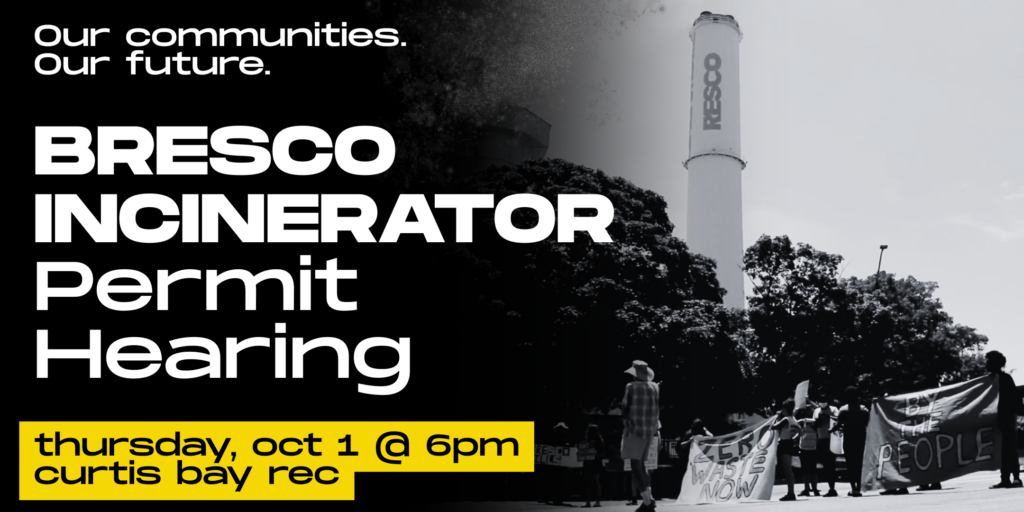
The first of these hearings is taking place this week on Thursday, May 14, and we are calling on community members and allies to show up and speak out at a critical public hearing on the future of the Quarantine Road Landfill (QRL).

6:00PM, Thursday, May 14
Curtis Bay Recreation Center (1630 Filbert St.)

Join residents, workers, and advocates in demanding:

  • Transparency on landfill conditions and violations
  • Accountability for unsafe practices
  • Fair pricing and policies that don’t prioritize profit over people
  • Real protections for community and worker health

Your voice matters—especially now. 

For decades, Baltimore City maintained an artificially low landfill “tip fee”—making QRL about half as expensive as surrounding landfills for large commercial haulers to dump in South Baltimore. The result:

  • A rapidly filling landfill
  • Chronic underfunding of safe operations
  • Increased risks to workers and nearby communities
  • Increased profits for large waste companies

After sustained pressure and a Federal Civil Rights complaint, the City raised the tip fee from $65 to $135 per ton. This change has already cut commercial waste tonnage roughly in half. This was a major step toward dismantling policies that have made South Baltimore a sacrifice zone.

In the process, another major injustice came into focus:

BRESCO incinerator ash—the largest waste stream entering QRL—is still dumped at ~$25 per ton, likely the lowest rate in the country, pointing to ongoing structural problems that continue to prioritize industry over community health. An incredible deal for BRESCO, and a terrible deal for all of us.

Community investigations now point to likely improper disposal of this toxic ash, with practices that may prioritize cost savings over health and safety.

At the same time, state inspections have identified 15+ serious compliance and safety issues, including:

  • Uncontrolled leachate outbreaks
  • Contaminated stormwater discharge
  • Exposed and windblown waste
  • Improper handling of incinerator ash
  • Landfill gas and leachate systems not properly operated
  • Erosion exposing buried waste
  • Standing water and vector risks
  • Inadequate cover, compaction, and site stabilization
  • And broader operational failures tied to understaffing and lack of equipment

Residents have repeatedly asked for transparency and answers on these issues—but have not received them. Requests to independently test the ash material have also been denied by state regulators for nearly a year.

Now, the landfill is primed to receive a new permit in the midst of these unresolved concerns. The bare minimum standard for this hearing: Will the public get clear, direct answers about these risks?

If you can’t make it to Curtis Bay on May 14, here are other ways you can participate in this urgent environmental justice action:

  1. Submit your written testimony before Thursday, May 21, 2026 to Shannon Heafey, MDE Title V Coordinator, by email at sh************@******nd.gov.
  2. Attend at our satellite site at Baltimore Unity Hall (1505 Eutaw Pl., Baltimore, MD 21217). You will have opportunity to testify from the satellite site.
  3. Tune in virtually to the livestream hosted by Maryland Department of the Environment. You will have opportunity to testify when called upon and share your perspective in the meeting chat. RSVP here to instantly receive the meeting link.

The story of SBCLT begins with a group of high school students who fought the construction of what would have become the nation’s largest trash-burning incinerator in their backyards — and won.

Even though that particular incinerator wasn’t built, the neighborhoods the students defended in their fight are still bearing the brunt of Baltimore’s pollution infrastructure today.

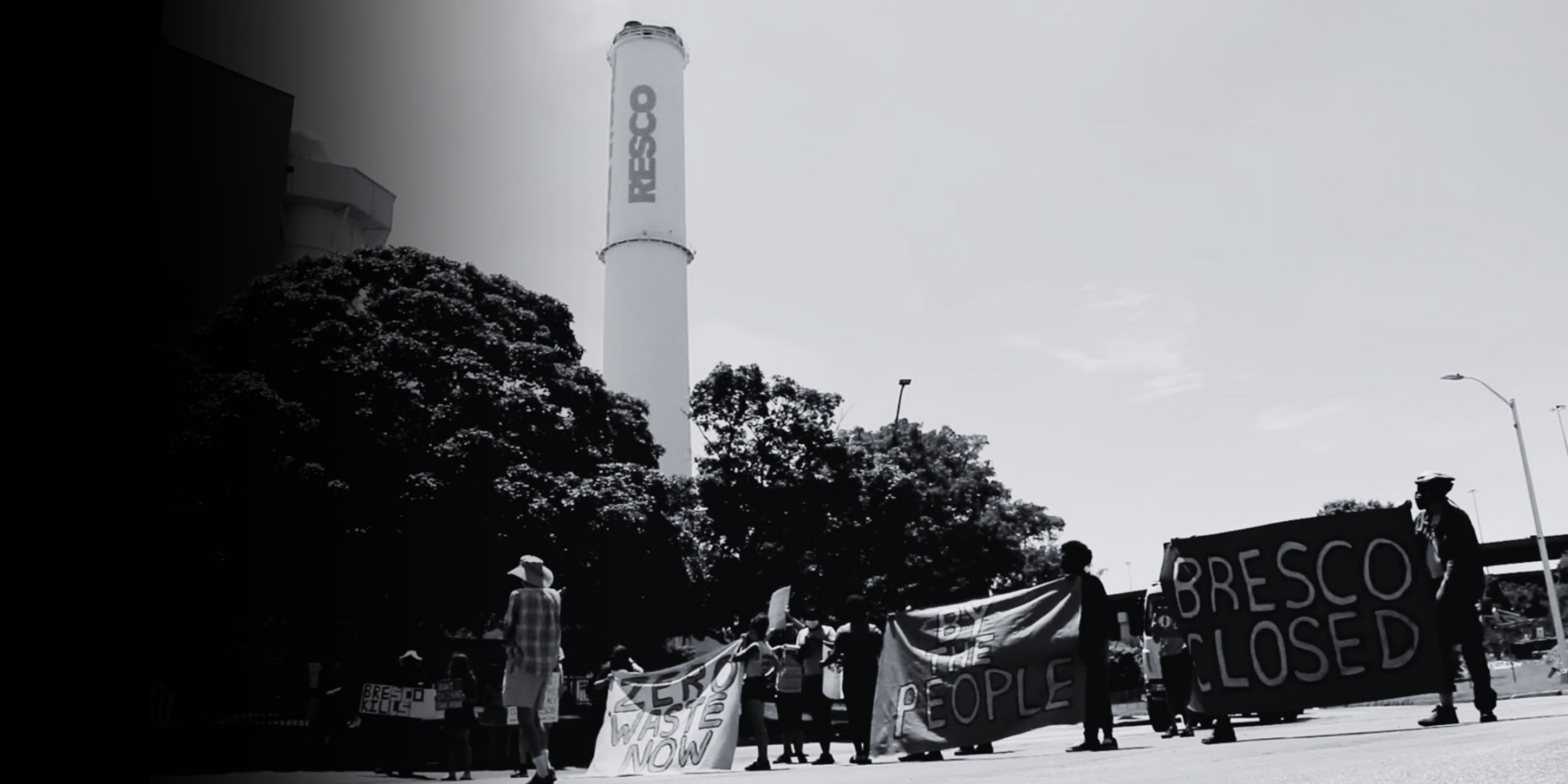
Baltimore continues to concentrate major waste and pollution infrastructure in South Baltimore. The Quarantine Road Landfill and BRESCO incinerator—both major contributors to an ongoing federal civil rights complaint filed by South Baltimore residents—are located in South Baltimore. Both entities are up for Title V air permit renewal with the Maryland Department of the Environment this year.

As part of the permit renewal process, the state will be holding public hearings and receiving public comments on what the community (YOU!) think about these renewals. These hearings are key opportunities for community members to demand stronger health and environmental protections.

The Hearings

There are two public hearings scheduled: One for the Quarantine Road Landfill, and the other for the BRESCO Incinerator. Both will be taking place at the Curtis Bay Recreation Center at 1630 Filbert St., Baltimore, MD.

  • Quarantine Road Landfill permit hearing — Thursday, May 14, 2026 at 6 PM at Curtis Bay Recreation Center
  • BRESCO Incinerator permit hearing — Thursday, June 11, 2026 at 6 PM at Curtis Bay Recreation Center

Why this Matters

  • Incinerators in South Baltimore cause $100M/year in health damages statewide (from just 4 pollutants).
  • The landfill is a major methane source and has a long history of community concerns, including disposal of 100,000’s of potentially toxic incinerator ash per year.
  • Policy choices matterAs a result of our Title VI Civil Rights complaint, Baltimore officials raised landfill fees for the first time since 1993 (from ~$60 to $135/ton), and waste volumes dropped sharply—showing change is possible – demonstrating that South Baltimore communities are not sacrifice zones or dumping grounds by accident.
  • Yet incinerator ash is still dumped at extremely low cost (~$25/ton vs. ~$85/ton in nearby Chester, PA), raising serious concerns about safety and oversight of this material known to contain toxicants including Dioxins.

Make Your Voice Count

Let’s pack the hearings with community members who demand stronger health and environmental protections! Please put these hearing dates on your calendar and make plans to come fill the room. We hope you consider speaking about how the presence of these polluting entities affects you and your family. But even if you don’t speak, your presence in the room makes a difference.

Let us know if you plan to attend and if you’d like support preparing comments by RSVP’ing here.

If you can’t attend the hearing in person on May 14 or June 11, you can still make your voice heard. You can submit your written comments ahead of time to the Department of Environment, and they will be entered into the public record for the permit renewal. Email your comments to sh************@******nd.gov by the following deadlines:

  • Written comments on the Quarantine Road Landfill need to be submitted by May 18, 2026
  • Written comments on the BRESCO Incinerator need to be submitted by June 15, 2026
This photo taken by SBCLT shows incinerator ash being dumped alongside mixed waste at the Quarantine Road Landfill in South Baltimore in 2025. Until stronger protections are put in place, this is the air we breathe.


On Saturday, April 18, 2026, we hosted Harvest of Hope, our first-ever annual fundraiser for the South Baltimore Environmental Justice Center. Because it was our first time doing a fundraiser event, we didn’t know what to expect. We wondered, What precedents would we set? How would our community show up to support SBCLT?

No need to wonder anymore: We were blown away by all the ways YOU showed up to support SBCLT and our mission!

Together, you raised over $18,000 in sponsorships, tickets, donations, raffle tickets, and silent auction bids.

Your energy and momentum inspired one generous anonymous donor and the “I Have a Dream Fund” at St. Vincent de Paul Church to make additional contributions totaling $45,000 toward EJ Center construction.

Harvest of Hope was not only a success because of the funds raised, but also for the connections created.

Our morning together at Unity Hall was a joyful, celebratory time. We reflected on SBCLT’s story and how we RISE, RECLAIM, and REBUILD South Baltimore together.

We began assembling our EJ Center sunflower tile wall, inspired in part by Faith Ringgold’s sunflower story quilt. Each tile represents a community member planting seeds of environmental justice in South Baltimore. Together, the seeds we plant will bloom into a radiant wall.

(For a $100 donation, you, too, can personalize a tile that will become a permanent part of the EJ Center! Make your donation today.)

Harvest of Hope 2026 was a beautiful picture of how community comes together: our volunteers, event sponsors, silent auction donors, and every single person who purchased a ticket or told a friend about the event. From the bottom of our hearts, THANK YOU. We are filled with hope for the future of South Baltimore because of YOU!

Our Silent Auction Donors

  • Baltimore Center Stage
  • Baltimore Compost Collective
  • Black Butterfly Dream Lab
  • Bmore Urbana
  • Brooklyn Billies Real Estate Club
  • Coppermine
  • Greedy Reads
  • Hon’s Honey
  • KSM Candle Co.
  • Motzi Bread
  • Niceshot Media
  • No Land Beyond
  • Orioles
  • Patagonia Baltimore
  • Peabody Heights Brewery
  • Red Emma’s Coffeehouse & Bookstore
  • Shae McCoy Photography
  • Spiral Sojourn Sanctuary
  • Taylor Smith-Hams
  • Thread Coffee Roasters

Thank you to every person who submitted testimony, showed up for rallies, emailed your legislators, and talked to your friends and coworkers about the CHERISH Act.

As of this week’s crossover deadline, the CHERISH Act will not move forward in this year’s General Assembly legislative session. Maryland Matters offered detailed reporting on the changes that were made to the CHERISH Act in committee this spring.

The CHERISH Act as we knew it would have protected communities from new polluting facilities being built in already-overburdened areas of Maryland, by requiring companies to meet new permitting standards. However, our lawmakers wanted to grant exemptions… lots of them… to their favorite industries. As result, CHERISH turned into something else entirely in the amendment process.

Here’s how CHERISH was exempted out of existence:

  • Exemption granted to developers who volunteer to clean up properties already contaminated with hazardous substances, regardless of cleanup status or proximity to residential areas
  • Exemption granted to permit renewals. Do you already own a polluting facility? No problem! Just keep doing what you’re doing.
  • Exemption granted to facility expansions. Do you already own a polluting facility? No problem! Now you can make it bigger.
  • Exemption granted to animal feeding operations. Do you dream of building a factory farm? Here, have a permit!

Once we realized that CHERISH had been exempted out of existence, we knew we could no longer support it. Communities deserve a bill that functions to protect them, and doesn’t prioritize the profits of polluting industries. As a coalition, we walked away from this gutted version of the CHERISH Act so that we can come back next year to fight for the CHERISH that we deserve. Will you join us?

On March 3, 2026, the Baltimore Banner reported that the amount of garbage taken to the landfill in South Baltimore has decreased by HALF ever since the city increased their landfill fees.

Photo from Jerry Jackson/The Banner

In October 2025, the city’s Board of Estimates voted to increase the tipping fees at the city’s Quarantine Road Landfill in South Baltimore. This was the first time these fees have increased since 1993, and the city made this change in response to SBCLT’s landmark civil rights complaint filed with the EPA in 2024. In our complaint, we made the case that Baltimore City has violated federal civil rights law by failing to move Baltimore away from its reliance on the incinerator, which harms and pollutes low-income neighborhoods in South Baltimore. The complaint specifically called for an increase in tipping fees at Quarantine Road.

While these are early results (again, the fee increase happened in October 2025, just a few months ago), we are pleased to see that this policy change that we pushed for has had tangible effects, moving us away from dependency on harmful waste practices. We’ll continue to watch this progress in the months and years to come.

Here at SBCLT, we believe that community is the power we need to hold leaders accountable and build a new systems that renew our neighborhoods and our planet. We’ll continue listening, researching, learning, and organizing in our communities, working together toward a future of environmental justice for all.

You can read the full Banner article here: After Baltimore increased fees, less trash came to its landfill

Our very own Carlos Sanchez is quoted in the article:

Carlos Sanchez, an organizer with the South Baltimore Community Land Trust, welcomed the news of declining landfill use but criticized what he called a “troubling lack of follow-through” by the city.

Sanchez’s organization filed a federal civil rights complaint in 2024 arguing that city leaders had failed to take adequate steps to phase out incineration and landfilling, leaving low-income communities of color to bear the air pollution burden. Within months, the U.S. Environmental Protection Agency opened an investigation.

In that complaint, activists called for an increase to the Quarantine Road tipping fee, and Sanchez said the recent change “demonstrates what is possible when residents organize and insist on accountability.”

Still, Sanchez has pushed for the city to stop using WIN Waste, in part to end the stream of incinerator ash to South Baltimore. That ash accounts for roughly a third of the waste dumped at the landfill each year.

Dear friends & community partners,

We are asking you to stand with us in strong support of the CHERISH Act this legislative session in Annapolis.

At the South Baltimore Community Land Trust, our commitment to this bill is rooted in lived experience. South Baltimore communities spent five years defeating a proposal to build the nation’s largest trash incinerator less than a mile from schools and homes in Curtis Bay — in a neighborhood already burdened by multiple pollution sources.

That fight revealed a glaring failure in public policy: despite overwhelming existing pollution, there were no protections to prevent new sources from being added to already overburdened communities. No cumulative impact safeguard. No line that said “enough.”

We won because the community took the lead — and a broad coalition stood behind that leadership to build the power required to stop an environmental injustice.

The CHERISH Act grows directly from that lesson. (Learn more about the bill in our January blogpost.) Community members formed the substance of this bill, defined the core principles as part of the MAJC coalition. If we want lasting protections against cumulative pollution, we must build the collective force to win again.


Here are four important ways you can help:

1. Sign your organization onto our group testimony

Add your organization’s name to our group testimony by the March 6 deadline to demonstrate to lawmakers that the CHERISH Act has broad, statewide support.

2. Submit written testimony

You may submit testimony as an individual or on behalf of your organization. Tell our lawmakers why this bill matters to you and your family! Every voice strengthens the case for this legislation.

3. Attend the hearings and help us pack the room

Let’s show lawmakers that our communities are paying attention. Wear green and help us pack the room at the Senate hearing (scheduled for Tuesday, March 3) and House hearing (scheduled for Monday, March 10). If you have questions about how to get to a hearing and what to expect, email jk****@********er.org.

4. Join the rally in Annapolis on March 17

Come out, bring your network, and help amplify the call for environmental justice! We will rally at 9:30AM on Tuesday, March 17 at Lawyers Mall in Annapolis to ensure that elected officials pass the CHERISH Act.

This is a critical moment. The strength of this bill depends on the strength of our coalition. Your participation—whether by signing on, testifying, or showing up—will make a meaningful impact.

Please reach out to gr**@***lt.org if you have any questions.

Need Housing?

Start now by filling out our Housing Application Form. We will follow up with you and do our best to support you in your journey.

Our Newsletter

Always stay up-to-date.
Join our Newsletter.