Curtis Bay
Grounds for Transformation
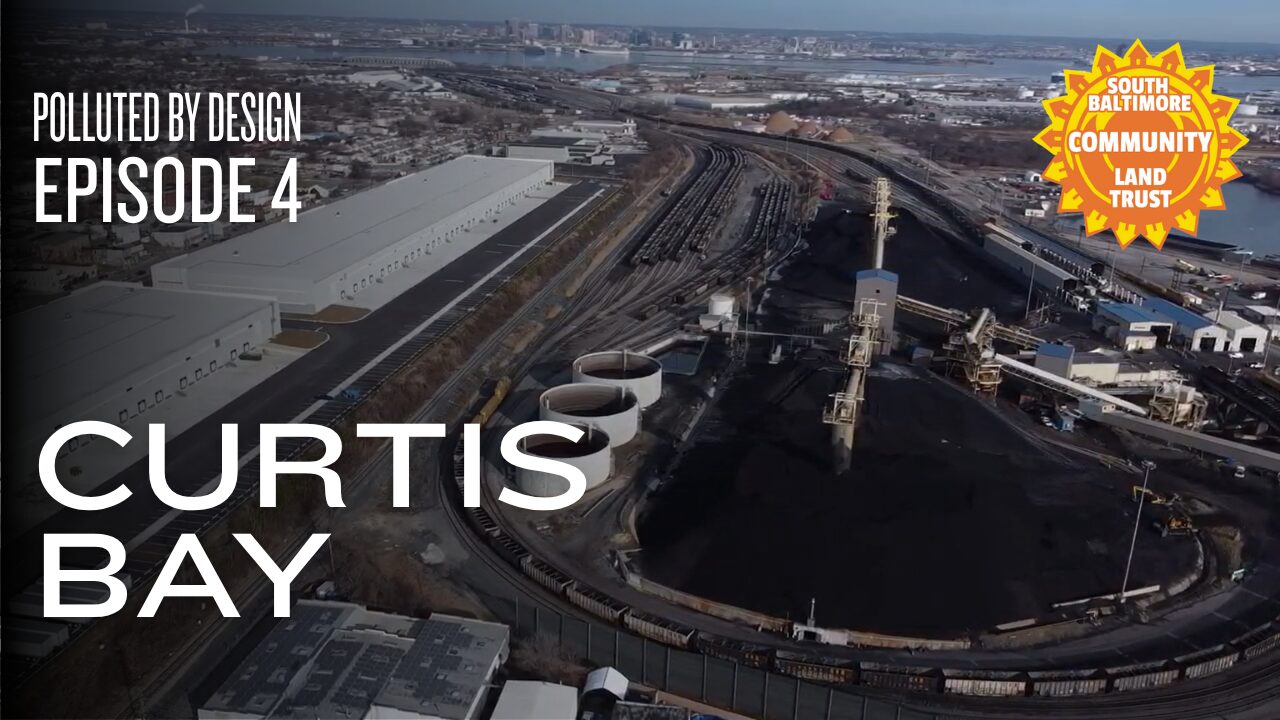
We conclude this four-part environmental justice series with Curtis Bay. This episode offers a unique story about the organizing, activism, and innovative ideas coming out of the outspoken people of Curtis Bay, and it also helps the viewer to connect all the stories and themes of this series together. Hawkins Point, Fairfield, Westport, and Curtis Bay all share a history with and the challenge of waste as a tool of racial, social, and economic suppression in Baltimore. By restating the role waste has in marginalizing, shaping, and even activating these communities, the audience can hopefully begin to realize how waste is not just a byproduct of human activity. Waste can be, and is used by governing bodies all around the world, as a tool to devalue select (often marginalized) peoples and enact quiet violence against them. This cannot be forgotten in future environmental justice organizing and planning for places like South Baltimore. If the state fails to confront the role waste plays in perpetuating inequality, it will continue to undermine community efforts to address environmental justice in South Baltimore.
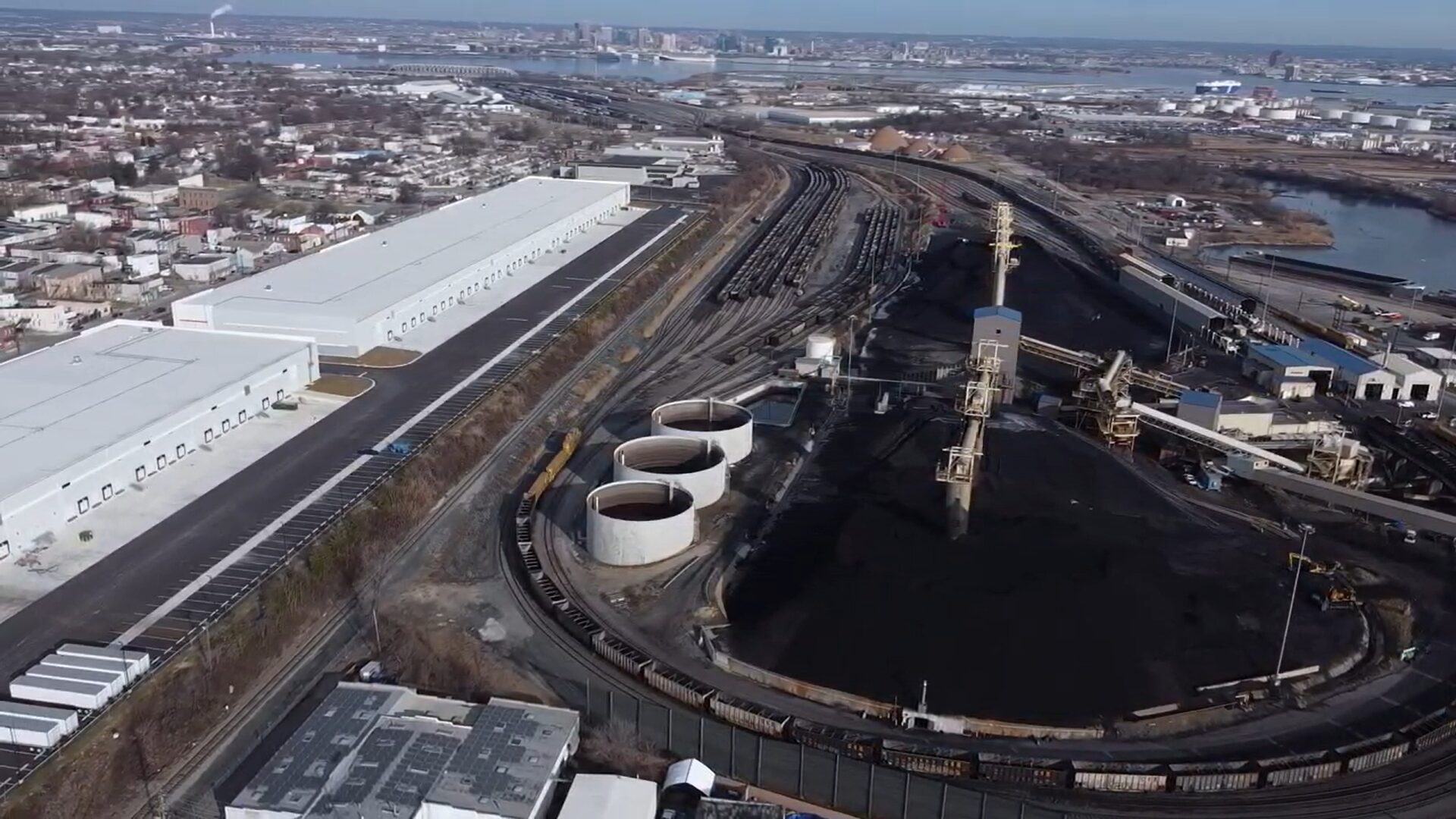
Curtis Bay—tucked into South Baltimore’s industrial waterfront—is a neighborhood shaped by a long history of environmental injustice. For more than a century, the community has lived beside landfills, incinerators, chemical plants, and the CSX coal terminal, whose towering black piles and constant rail traffic dominate the landscape. Residents have experienced generations of disproportionate respiratory illness, fires, explosions, and chronic neglect from state and city institutions. Yet, Curtis Bay is also a site of extraordinary resilience and imagination.
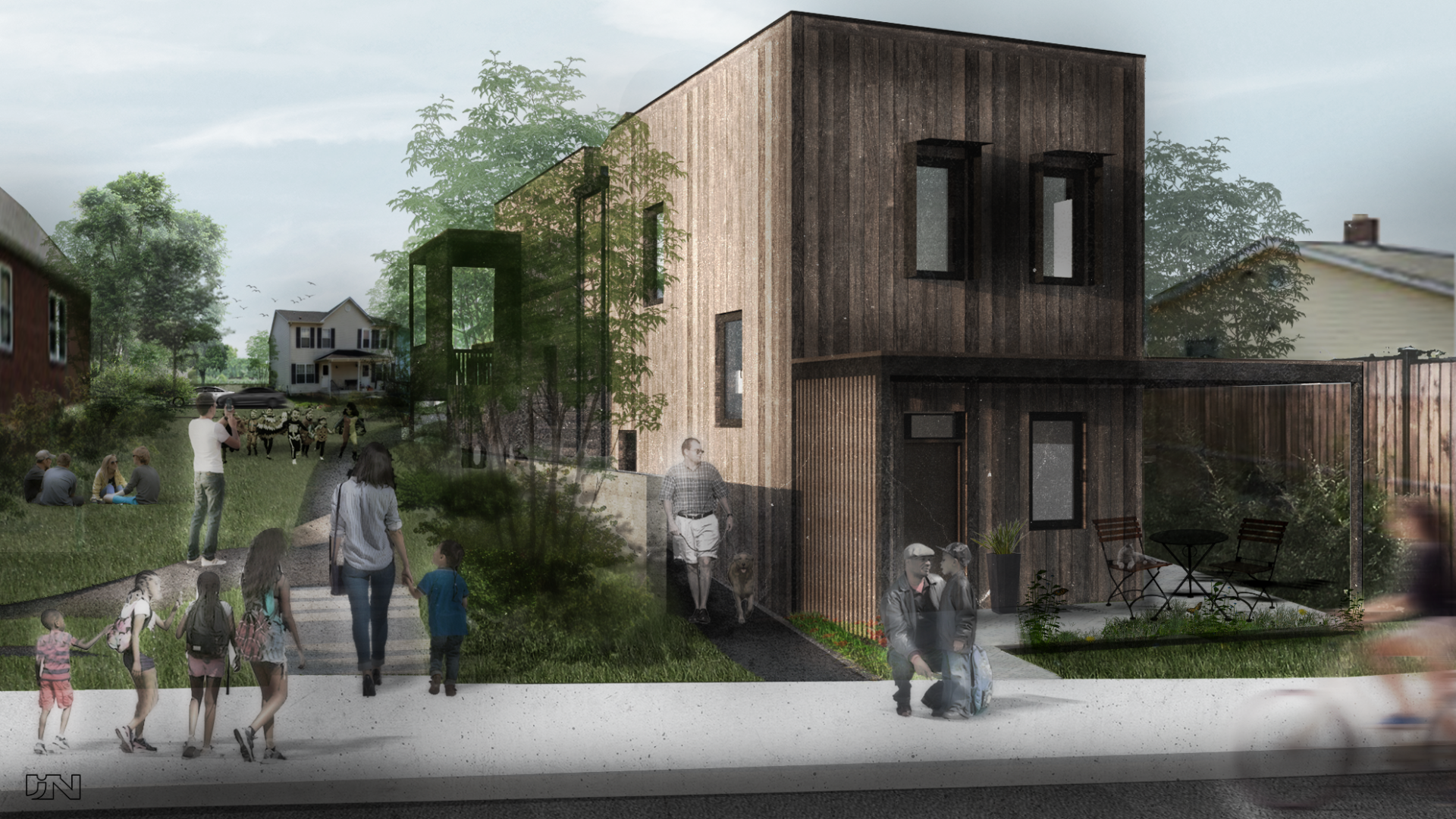
“Curtis Bay: Transformation” follows organizers, youth leaders, and environmental justice advocates as they challenge the notion that their neighborhood must function as a “sacrifice zone.” This film shows how the community’s everyday landscape makes environmental injustice visible and undeniable, while also revealing how decades of policy choices and state-sanctioned industrial expansion created the life-threatening conditions that residents face today. At the same time, it highlights Curtis Bay as a hub of innovation—where youth-led research, community composting, land reclamation, and neighborhood organizing chart a path toward a livable future.
As this film moves through present-day organizing and the filing of a 2024 civil rights complaint by the South Baltimore Community Land Trust, it underscores that environmental justice cannot rest solely on community resilience. Achieving real change requires active participation, accountability, and investment from city and state institutions. Even so, this episode closes by returning to everyday moments of joy and possibility—reminding viewers that Curtis Bay has a future worth fighting for, and that its realization depends on collective imagination and political will. At the center of this story is a guiding question: What does justice look like for Curtis Bay, and who must deliver it?
Additional Resources on Episode 4: Curtis Bay
- What does environmental justice mean in practice for communities living alongside heavy industrial infrastructure, like Curtis Bay? How do these environmental burdens manifest in everyday life?
- In what ways do grassroots movements in Curtis Bay challenge conventional narratives about where innovation and expertise come from?
- Ahmann, Chloe. Futures after Progress: Hope and Doubt in Late Industrial Baltimore. The University of Chicago Press, 2024.
- “Baltimore Is Burning Trash, so We’re Starving the Fire | America’s Dirty Divide.” YouTube, Guardian News and Media, 2021, youtu.be/eZ10c6brW6I?si=z0NKl2Vm2Af5XmUh. Accessed 17 Dec. 2025.
- “Complaint Under Title VI of the Civil Rights Act of 1964 against the City of Baltimore.” South Baltimore Community Land Trust, 2024 https://canvas.cornell.edu/courses/76597/files/folder/1%20Introduction%20to%20the%20course?preview=13266224
- “Curtis Bay: Baltimore’s Two Hundred and Fifty Million Dollar Industrial Development.” Curtis Bay Terrace, Incorporated, 1125 Munsey Building, Baltimore, Maryland, 1918. https://drive.google.com/file/d/12ZwwfGqzJYMJiE3LC1WIGkI2JA3lJx9L/view?usp=sharing
- “Curtis Bay Residents Demand CSX Plant Shut down despite Settlement for 2021 Explosion.” YouTube, WJZ, 2021, youtu.be/vGLy4bmD3cg?si=Ui_LZdEOEx4IdeFm. Accessed 17 Dec. 2025.
- “Curtis Bay Residents Rally to Keep Neighborhood Coal-Free.” YouTube, WBAL-TV 11 Baltimore, 2024, youtu.be/HWJW_Gy5mK8?si=JhhVgN_7lAgAjehw. Accessed 17 Dec. 2025.
- Department of Public Works, Kuchta, Francis. Knott Property – Pennington Avenue Landfill Extension, City of Baltimore, 1977. https://drive.google.com/file/d/1GxNCC4l6RJotzNrGwc0eHFdLj_74zrAC/view?usp=sharing
- “Environmental Injustice in Curtis Bay.” YouTube, ABC WMAR-2, 2023, https://www.youtube.com/watch?v=qc0I6sajSvw. Accessed 17 Dec. 2025.
- Fabricant, Nicole. Fighting to Breathe: Race, Toxicity, and the Rise of Youth Activism in Baltimore. University of California Press, 2023.
- Garrison, Lindley M. “Letter from the Secretary of War.” Received by the 1st session of the 63rd Congress, Committee on Rivers and Harbors, 10 Apr. 1913, Washington DC. https://drive.google.com/file/d/1EwxgK5Wq6ulpcszfPRp0H2LyD2Oc4r30/view?usp=share_link
- Liss, Gary. “Baltimore’s Fair Development Plan for Zero Waste.” The Fair Development Roundtable Coalition, 2020. https://canvas.cornell.edu/courses/76597/files/folder/3%20Space%20and%20waste?preview=13266235
- “Medical Waste Incinerator Operator Fined $1M.” YouTube, WBAL-TV 11 Baltimore, 2023, youtu.be/n9GXHwam_6U?si=9bycyyfOYfReyy-g. Accessed 17 Dec. 2025.
- Moss, Ellison. “Coal is again moving through the Port of Baltimore.” 14 Jun. 1981. https://drive.google.com/file/d/1Fmox83hi_Tjym3iIDjp4lOaToaCEs6_w/view?usp=sharing
- Pandian, Chloe Ahmann and Anand. “Op-Ed: The Fight against Incineration Is a Chance to Right Historic Wrongs.” Baltimore Beat, 28 June 2024, baltimorebeat.com/op-ed-the-fight-against-incineration-is-a-chance-to-right-historic-wrongs/. Accessed 17 Dec. 2025.
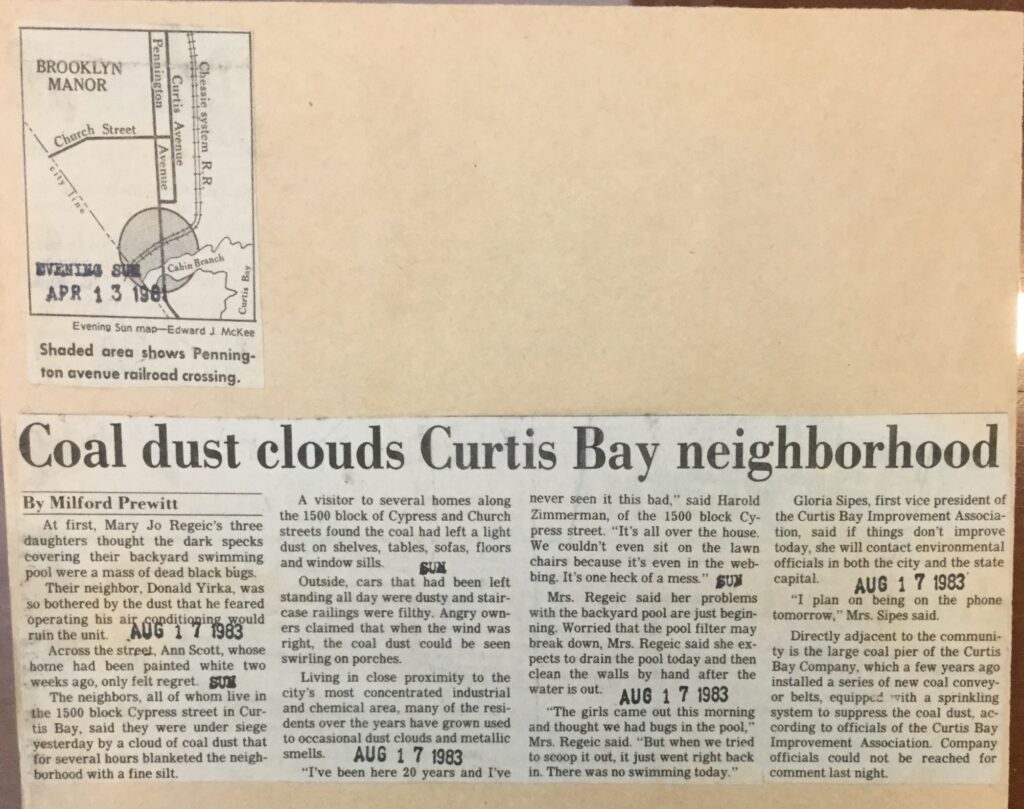
- Prewitt, Milford. “Coal Dust Clouds Curtis Bay Neighborhood.” 17 Aug. 1983. https://drive.google.com/file/d/1lO4_IZd4ZlOkRyLqwnwyz6fVmGWWntmY/view?usp=sharing
- “Protests over Curtis Bay Medical Waste Incinerator.” YouTube, WBAL-TV 11 Baltimore, 2024, youtu.be/ioLmrytQZEA?si=DA3gP1QS3VUd3WHZ. Accessed 17 Dec. 2025.
- Poe, Benjamin. “Curtis Bay Improvement Association .” Received by Mayor of Baltimore, William Donald Schaefer, 4015 Pennington Avenue, 30 Jan. 1980, Baltimore, Maryland. https://drive.google.com/file/d/1dbs6m6i1Usby8sluEla2Cve6kLR0hm-g/view?usp=sharing
- Vasudevan, Krishnan, director. DJI_0031.Mp4. Curtis Bay, Baltimore, 2023, drive.google.com/file/d/1nR3Trl-T4cMXeE9Fd0Q5Iu_NfkGqnB_I/view?usp=sharing. Accessed 2025.
- Vasudevan, Krishnan, director. Drone Footage 16.Mp4. Curtis Bay, Baltimore, 2023, drive.google.com/file/d/1py_Wmka081JRJJJypjEogC0VVGe5tNaW/view?usp=sharing. Accessed 2025.
- Vasudevan, Krishnan, director. Drone Footage 20.Mp4. Curtis Bay, Baltimore, 2023, drive.google.com/file/d/1-eGx0yGGmMS6s-OSPiDwE81cmSDHp9e6/view?usp=sharing. Accessed 2025.
- Vasudevan, Krishnan, director. Drone Footage 8.Mp4. Curtis Bay, Baltimore, 2023, drive.google.com/file/d/1S81gZpaUxDWf3v8XTj4BO0VTcHoyx8Dd/view?usp=sharing. Accessed 2025.
- Williams, Carroll. “Acid Fumes at Curtis Bay Protested by Residents.” 27 June 1945. https://drive.google.com/file/d/1ZlTbhEc6tpkgIuXvi6IE4fd-agU02r9U/view?usp=sharing